5 Hidden Features of the 2026 Hyundai Sonata Hybrid You Must Know About
The mid-size sedan segment has undergone a dramatic transformation over the last decade. As SUVs and crossovers claimed a larger share of the driveway, the remaining sedans had to evolve or face obsolescence. Hyundai’s response has been one of aggressive innovation, particularly with the 2026 Hyundai Sonata Hybrid. While many consumers are familiar with the vehicle’s striking "Seamless Horizon" LED light bar and its impressive fuel economy ratings, the true depth of the engineering lies beneath the surface. For tech enthusiasts and green-energy advocates, the 2026 model represents more than just a commute-friendly vehicle; it is a mobile laboratory of electronic integration and aerodynamic efficiency.
For those shopping in the electronics-heavy automotive space, the 2026 Sonata Hybrid stands out by prioritizing the user interface and hidden driver-assistance algorithms over gimmicky novelties. In this deep dive, we explore five specific, under-discussed features that elevate this hybrid from a mere fuel-saver to a sophisticated piece of rolling technology. Understanding these features is essential for any buyer looking to maximize their investment in a vehicle that bridges the gap between traditional internal combustion and a fully electric future.
1. The e-Motion Drive System: Electronic Torque Vectoring
While most hybrid drivers prioritize efficiency, the 2026 Sonata Hybrid introduces a sophisticated software layer known as e-Motion Drive. This isn’t a mechanical performance upgrade in the traditional sense, but rather a digital enhancement of the vehicle’s dynamics using the electric motor’s instant torque capabilities to improve handling and comfort.
At its core, the e-Motion Drive system uses the electric motor to apply subtle braking or acceleration forces to the wheels during cornering or when navigating speed bumps. For electronics aficionados, this is a masterclass in sensor integration. The car’s Inertial Measurement Unit (IMU) detects the pitch and roll of the chassis in real-time. If the system senses the car is about to dive forward under heavy braking, it can command the electric motor to apply a tiny burst of counter-torque to level the body. This hidden feature results in a remarkably flat ride that feels more like a premium German sports sedan than a standard family hybrid. It effectively uses software to solve hardware limitations, minimizing cabin pitch and keeping passengers more comfortable during spirited driving or sudden maneuvers.
2. Intelligent "Green Zone" Drive Mode 2.0
The 2026 model year sees the expansion of Hyundai’s Green Zone Drive Mode into a much more autonomous and data-driven feature. Most hybrids switch between gas and electric based on battery level and throttle input. However, the Sonata Hybrid’s Green Zone system utilizes GPS data and navigation history to revolutionize how energy is spent. Through the deep integration of the onboard electronics and cloud-based mapping, the car recognizes when it is entering residential areas, proximity to schools, or hospitals.
When the vehicle identifies these areas, it automatically prioritizes EV-only driving, even if the driver is being slightly more aggressive with the pedal than usual. What makes the 2026 version "hidden" is how it prepares for these zones before you even arrive. If your route includes a designated Green Zone three miles away, the hybrid system will aggressively run the gasoline engine on the highway to top off the battery, ensuring you have 100% electric capacity when you reach the quiet neighborhood. This proactive energy management is a sophisticated example of how modern automotive electronics are moving toward "anticipatory AI" rather than just reactive logic.
3. Digital Key 2.0 with Near-Field and Ultra-Wideband Tech
While many cars allow you to use your phone as a key, the 2026 Hyundai Sonata Hybrid employs Digital Key 2.0, utilizing both Near-Field Communication (NFC) and Ultra-Wideband (UWB) technology. This distinction is critical for the tech-savvy buyer. Early versions of digital keys required you to tap your phone against the door handle, which often felt slower than just using a physical fob.
Shop the latest Electronics picks on Amazon.
View Offers →With the 2026 Sonata’s UWB integration, the car’s electronic architecture can locate your smartphone with centimeter-level precision. This means the car can differentiate between you standing next to the driver’s door versus the trunk. As you approach, the car can initiate a welcome sequence, unfolding mirrors and illuminating the "Seamless Horizon" lamp without the phone ever leaving your pocket. Furthermore, the electronics allow for secure, time-expiring key sharing via Apple Wallet or Samsung Pass. A owner can send a "key" to a friend that only works for two hours and restricts the vehicle’s top speed to 65 mph—all managed through the vehicle's encrypted telemetry module.
4. Predictive Shift System via Integrated Sensors
Even though the Sonata Hybrid uses a traditional 6-speed automatic transmission rather than a CVTs found in many competitors, it hides a high-tech trick known as the Predictive Shift System. Unlike a standard transmission that reacts to your foot’s pressure, this system uses the front-facing radar (used for cruise control) and the navigation’s elevation data to prepare for gear changes before they are needed.
Imagine you are approaching a steep incline or a slow-moving truck. A standard transmission waits for the engine to struggle or for the driver to floor the gas before downshifting. The Sonata Hybrid’s electronics "see" the hill or the obstacle on the map and the radar. It downshifts in anticipation, ensuring that the engine and electric motor are already in their optimal power bands. This minimizes shift shock and reduces the "rubber band" feel common in hybrid powertrains. For the driver, the experience is simply a much smoother, more intuitive delivery of power that feels oddly psychic, though it is actually just a very clever application of sensor fusion.
5. Advanced Atmospheric Blue Light Sterilization
In a world increasingly focused on health and cabin air quality, the 2026 Sonata Hybrid includes a hidden feature within its HVAC electronics: a built-in UV-C sterilization system. While high-end air filters are common, the Sonata uses a specific blue-light LED array inside the ventilation ducting and within the wireless charging tray. This is an electronic solution to a biological problem.
When the car is parked or when the AC is running on a specific "Clean Air" cycle, these UV-C lights activate to neutralize bacteria and viruses that can accumulate on the evaporator coils or on your smartphone’s surface while it charges. To prevent battery drain, the system is managed by the Integrated Power Control Unit (IPCU), which monitors the 12V battery’s health. This feature is entirely invisible to the user but works silently in the background to ensure that the air being circulated is not just cooled or heated, but electronically purified, a feature usually reserved for high-end home filtration systems or luxury flagship vehicles.
Detailed Analysis: Technology vs. Practicality
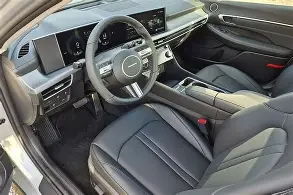
The 2026 Hyundai Sonata Hybrid is a fascinating case study in automotive electronics. Hyundai has made a concerted effort to move away from plastic-heavy dashboards toward a "curved display" aesthetic. The dual 12.3-inch screens are the centerpiece, but the real power lies in the ccNC (connected car Navigation Cockpit) architecture. This hardware supports faster processing speeds and allows for much deeper Over-the-Air (OTA) updates than previous generations. This means that features like the e-Motion Drive parameters can actually be tuned and improved by Hyundai engineers long after you’ve driven the car off the lot.
From a buyer’s perspective, the electronics suite offers a high level of customization. The head-up display (HUD) has been upgraded to a 12-inch projection area, and unlike older systems that washed out in direct sunlight, the 2026 HUD uses a high-nit liquid crystal panel that remains crisp even against white concrete or bright snow. The haptic feedback on the climate control panel is another area where electronics meet ergonomics; instead of just a flat touch screen, the panel provides a tactile vibration that mimics a physical button, allowing drivers to make adjustments without taking their eyes off the road.
Discover deals on Electronics — updated daily.
See Deals →Pros & Cons of the 2026 Sonata Hybrid Electronics Suite
- Pro: Seamless Connectivity – The wireless integration for both major smartphone platforms is flawlessly executed, with the UWB Digital Key 2.0 providing a truly fob-less experience.
- Pro: Proactive Efficiency – The Predictive Shift System and Green Zone Drive Mode 2.0 remove the guesswork from hybrid driving, maximizing MPG without requiring "hyper-miling" techniques from the driver.
- Pro: OTA Longevity – The ccNC architecture ensures the car’s software remains modern, with the ability to update everything from the infotainment to the battery management logic.
- Pro: Ergonomic Displays – The dual-curved 12.3-inch displays offer excellent visibility and minimize glare through an anti-reflective coating that rivals high-end tablets.
- Con: Learning Curve – With so many "hidden" and "predictive" features, some drivers may find the car’s autonomous decisions (like downshifting for a hill you haven't seen) slightly jarring at first.
- Con: Haptic Dependency – While the haptic feedback is good, some purists may still prefer physical knobs for high-frequency adjustments like fan speed or temperature.
- Con: UI Complexity – The sheer depth of the menus in the ccNC system can be overwhelming for those who are not particularly tech-literate.
Comparison Table: 2026 Sonata Hybrid vs. Key Competitors
| Feature | 2026 Hyundai Sonata Hybrid | 2026 Toyota Camry Hybrid | 2026 Honda Accord Hybrid |
|---|---|---|---|
| Display Setup | Dual 12.3-inch Curved Panels | 12.3-inch Floating Screen | 12.3-inch Landscape Screen |
| Digital Key | UWB & NFC (Digital Key 2.0) | NFC Only (Select Trims) | Smartphone App Based |
| Handling Tech | e-Motion Torque Vectoring | AWD (Mechanical/Electric) | Motion Management System |
| Energy Logic | GPS-Based "Green Zone" 2.0 | Predictive Efficient Drive | Driver-Adjustable Paddles |
| OTA Capability | Full Vehicle (Drivetrain/Infotainment) | Limited (Infotainment Only) | Full Vehicle |
Buying Guide: Maximizing the Tech in Your Sonata Hybrid
When purchasing the 2026 Hyundai Sonata Hybrid, selecting the right trim level is paramount to enjoying these features. While the lower trims offer the fundamental hybrid fuel savings, the SEL Convenience and Limited trims are where the electronic features truly shine.
For those who prioritize the UWB Digital Key and the Predictive Shift System, the Limited trim is almost a requirement. It includes the full sensor suite needed for the radar-linked transmission logic and the head-up display. Buyers should also consider their smartphone ecosystems; while the Sonata is compatible with most devices, the UWB functions are currently most robust on the latest three generations of flagship devices. If you are using an older smartphone, you may be limited to the NFC tap-to-start functions rather than the seamless approach-and-unlock feature.
Another consideration for buyers is the long-term maintenance of these systems. Unlike mechanical parts, electronic systems like the e-Motion Drive rely on sensor calibration. If the vehicle is involved in even a minor fender bender, it is crucial to have the sensors recalibrated at a certified facility to ensure that features like the predictive shifting and torque vectoring continue to operate accurately. Furthermore, prospective owners should check their cellular coverage; many of the "predictive" features rely on the car's built-in 4G/5G connection to pull live map data and elevation profiles.
Conclusion
The 2026 Hyundai Sonata Hybrid is a testament to how far the mid-size sedan has come. It is no longer just a "sensible choice" for the budget-conscious; it is a high-tech alternative for those who want the luxury of predictive software and advanced sensor integration without the price tag of a premium European brand. Features like the e-Motion Drive system and the UWB-enabled Digital Key 2.0 demonstrate that Hyundai is thinking several steps ahead of the competition, focusing on "hidden" improvements that enhance the daily driving experience through subtle automation.
In the electronics category, the Sonata Hybrid stands out by making complex technology invisible. You don't have to be an engineer to appreciate the way the car levels itself through a corner or the way it silently cleans its own cabin air. By focusing on these five hidden features, Hyundai has created a vehicle that feels less like a machine and more like a smart companion. For the modern buyer who values integration, security, and efficiency, the 2026 Sonata Hybrid is a compelling look at the future of the electrified sedan.