The Truth About the 6 Series R635 2020 Qled: Pros, Cons, and Verdict
When the 6 Series R635 2020 QLED model first hit the market, it arrived with a heavy weight of expectation. Its predecessors had already established a reputation for disrupting the premium television space by offering features typically reserved for high-end flagship sets at a fraction of the cost. The 2020 iteration, specifically the R635, was designed to take that disruption a step further by introducing Mini-LED backlighting—a technology that, at the time, was almost exclusively found in televisions costing twice as much. Years later, this model remains a significant point of discussion for budget-conscious home theater enthusiasts and gamers looking for a high-performance display that doesn't break the bank.
In the landscape of modern displays, the 6 Series R635 occupies a unique middle ground. It is not a entry-level television designed for a guest bedroom, nor is it a multi-thousand-dollar OLED masterpiece. Instead, it is aimed squarely at the "sweet spot" of the market: the living room where movies are watched, sports are followed, and next-generation consoles are played. Understanding whether this TV holds up requires looking beyond the spec sheet and examining how Mini-LED technology, Quantum Dots, and a robust smart platform converge to solve common viewing frustrations like glare, poor contrast, and motion blur.
Detailed Product Analysis: The Mini-LED Evolution
The defining characteristic of the 6 Series R635 is its implementation of Mini-LED technology. To understand why this matters, one must look at how traditional LED-LCD TVs work. Most standard LED TVs use a relatively small number of large LED bulbs to backlight the screen. The R635 replaces these with thousands of microscopic LEDs. By shrinking the light source, the manufacturer was able to pack more lights into the same physical space, allowing for much finer control over local dimming zones.
In practice, this translates to significantly better contrast. When a scene features a bright object—like a flashlight in a dark cave or a spaceship against the void of stars—the R635 can keep the black areas of the screen truly dark while pushing the bright areas to high luminance levels. While it doesn't quite reach the perfect "absolute black" of an OLED panel, it gets closer than almost any other TV in its price bracket. This makes it an exceptional choice for movie nights where light control and atmosphere are paramount.
Complementing the Mini-LEDs is the Quantum Dot (QLED) layer. This film of nanocrystals sits between the backlight and the LCD panel, enhancing the color spectrum. Traditional LEDs often struggle to produce deep reds and vibrant greens, often appearing slightly washed out. The QLED technology in the R635 ensures that colors are saturated and accurate, covering a wide color gamut that meets the requirements for high-quality HDR (High Dynamic Range) content. Whether watching a vibrant animated film or a prestige drama with a specific color grade, the R635 delivers an image that feels rich and lifelike.
Gaming Performance and Connectivity
For many buyers, the 6 Series R635 was the "Goldilocks" choice for the launch of the PlayStation 5 and Xbox Series X. At its release, it was one of the few mid-range sets to offer a 120Hz refresh rate, although it is important to clarify its limitations. The panel itself supports 120Hz, which is vital for smooth motion in fast-paced games and sports. It also introduced specialized gaming features such as Variable Refresh Rate (VRR) and Auto Low Latency Mode (ALLM).
VRR is particularly important for modern gaming because it allows the TV to sync its refresh rate with the console's frame rate output. This eliminates "screen tearing," those distracting horizontal lines that appear when the game and the TV are out of sync. Combined with the "THX Certified Game Mode," the R635 provides a low-input-lag experience that feels responsive. Competitive players will notice the difference in timing-sensitive genres like first-person shooters or racing simulators. However, it should be noted that while the panel is 120Hz, its HDMI ports are 2.0 rather than 2.1, meaning it can handle 1440p at 120Hz or 4K at 60Hz, but not 4K at 120Hz. For most gamers, 4K at 60Hz remains the standard, making this a minor trade-off for the price point.
Smart Platform: The Roku Experience
The R635 utilizes the Roku TV platform, which remains one of the most user-friendly smart interfaces available. Unlike some competing operating systems that feel cluttered with advertisements or complex sub-menus, Roku is built on a simple grid of tiles. Every app (or "channel") is easily accessible, and the universal search function is notoriously effective at finding which service is hosting a specific movie or show.
Discover deals on TVs & Home Theater — updated daily.
See Deals →One of the hidden benefits of the Roku platform on the R635 is the "Private Listening" feature via the Roku mobile app. This allows users to redirect the TV's audio to their smartphone, enabling them to watch loud action movies with headphones late at night without disturbing others in the house. Furthermore, the TV supports major HDR formats, including Dolby Vision, HDR10, and HLG, ensuring that regardless of which streaming service is used—Netflix, Disney+, or Apple TV—the content will be displayed in its best possible format.
Pros and Cons
Every piece of technology involves compromises. To give a balanced view of the 6 Series R635, we have categorized the strengths and weaknesses that users frequently encounter during daily use.
Pros
- High Contrast with Mini-LED: The use of thousands of small LEDs provides deep black levels and minimizes "blooming" (light leaking from bright spots into dark areas).
- Excellent Peak Brightness: This TV can get incredibly bright, making it a stellar performer in well-lit rooms with large windows where reflections might otherwise be a problem.
- Vibrant QLED Colors: The Quantum Dot layer produces a wide and accurate color palette, adding a level of "pop" to HDR content.
- Intuitive Smart Interface: Roku TV is simple, fast, and stays out of the way, making it accessible for children and less tech-savvy adults alike.
- Value Proposition: It offers premium features like 120Hz and Mini-LED at a price point where competitors often offer standard edge-lit displays.
- Build Quality: The aesthetic is understated but sturdy, featuring thin bezels and a reliable stand design that feels premium.
Cons
- Viewing Angles: Like most VA (Vertical Alignment) panels, the picture quality degrades if you sit too far to the side. Colors can look washed out when viewed from an angle.
- No HDMI 2.1: While it has a 120Hz panel, the lack of HDMI 2.1 means you cannot play games at 4K resolution and 120Hz simultaneously.
- Local Dimming "Black Crush": Occasionally, the local dimming algorithm can be too aggressive, hiding small details in very dark scenes to maintain deep blacks.
- Panel Uniformity Issues: Some units exhibit "Dirty Screen Effect," where faint patches of uneven brightness are visible during panning shots of solid colors, like a football field or a clear sky.
- Sound Quality: As with most thin televisions, the built-in speakers lack bass and depth, making a soundbar almost mandatory for a cinematic experience.
Comparison Table: 6 Series R635 vs. Typical Competitors
To provide context on how the R635 stacks up against other types of displays in the 2020-2021 window, consider the following technical breakdown:
| Feature | 6 Series R635 (QLED) | Standard Mid-Range LED | Entry-Level OLED |
|---|---|---|---|
| Backlight Tech | Mini-LED | Full-Array Local Dimming | Self-Emissive (No Backlight) |
| Peak Brightness | Very High (800-1000+ nits) | Moderate (400-600 nits) | Moderate (500-700 nits) |
| Contrast Ratio | High | Medium-High | Infinite |
| Color Depth | Quantum Dot (Wide Gamut) | Standard RGB | Excellent (Wide Gamut) |
| Gaming Refresh | 120Hz (up to 1440p) | 60Hz | 120Hz (Full HDMI 2.1) |
| Viewing Angle | Narrow | Narrow to Moderate | Near Perfect |
Buying Guide: Is the R635 Right for You?
Deciding whether to invest in the 6 Series R635 requires an assessment of your specific environment and how you intend to use the television. It is not a one-size-fits-all solution, but for many, it represents the best possible use of a mid-range budget.
Consider Your Room Lighting
One of the strongest arguments for the R635 is its brightness. If your living room has many windows or you frequently watch TV during the day, typical OLED screens may struggle with reflections and overall visibility. The R635's high peak brightness allows it to "cut through" the glare. Conversely, if you have a dedicated, pitch-black basement theater, you might prioritize a screen with better viewing angles or even deeper blacks.
Gaming Priorities
If you are a hardcore console gamer, you need to weigh the importance of 4K/120Hz. If you play competitive shooters and want the absolute lowest latency and highest resolution possible on a PS5 or Xbox Series X, you might feel limited by the HDMI 2.0 ports. However, if you are a "casual-plus" gamer who values HDR richness and smooth motion at 60fps or 1440p high-frame-rate gaming, the R635 is more than capable and provides an immersive experience that few other TVs in this price range can match.
Mounting and Setup
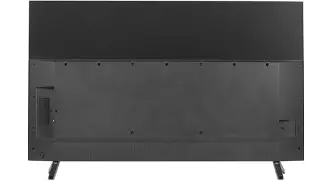
Buyers should be aware of the physical footprint of the R635. It features "v-shaped" legs that are placed toward the ends of the screen. If you are not mounting the TV on a wall, you will need a media console that is wide enough to accommodate these legs. Many modern TVs have moved toward center-aligned stands, but the R635 retains the wide-stance design which can be a hurdle for smaller furniture.
Find top-rated TVs & Home Theater products at great prices.
View Offers →Software Longevity
Since the R635 uses Roku, it generally sees consistent software updates. Roku is known for supporting older hardware for many years, meaning the smart capabilities are unlikely to become obsolete as quickly as some proprietary smart platforms. If you prefer the Google TV or Fire TV ecosystem, you can always plug in an external streaming stick, but the native Roku experience is integrated well enough that most users won't feel the need.
Real-World Use Cases
To truly evaluate the "truth" behind this model, it helps to look at how it performs in common scenarios. In a Sports Watching scenario, the 120Hz panel is a major asset. Football, basketball, and hockey involve fast-moving objects across a static background. The R635 handles this motion with minimal "ghosting," though the aforementioned "Dirty Screen Effect" can occasionally be seen during wide pans across bright green fields.
In a Cinematic Movie scenario, particularly when watching 4K Blu-rays or high-quality streams in Dolby Vision, the TV shines. The Mini-LEDs do a commendable job of managing high-contrast scenes. For instance, in a space thriller, the cockpit lights of a ship will remain bright and piercing without casting a grey haze over the surrounding blackness of space. This is where the TV earns its "6 Series" pedigree, punching well above its weight class.
Finally, in a Casual Daily Use scenario (news, YouTube, background noise), the R635 is a reliable workhorse. It starts up quickly, scales low-resolution content (like 720p cable signals) effectively, and doesn't require constant settings adjustments. The remote is simple, featuring dedicated buttons for popular streaming services, making it a frictionless part of a household's daily routine.
The Verdict
The truth about the 6 Series R635 2020 QLED is that it remains a landmark achievement in the "value-premium" category. It was the television that proved Mini-LED technology wasn't just for the wealthy, and it brought a level of HDR performance to the masses that was previously unheard of. It is a TV of high peaks and few significant valleys.
While the lack of HDMI 2.1 might be a sticking point for future-proofing enthusiasts, and the viewing angles remain a limitation of the panel type, these are acceptable compromises for the performance offered. It delivers bright, punchy, and color-accurate images that satisfy the demands of both movie buffs and gamers. If you are looking for a display that prioritizes contrast and color without the premium price tag of an OLED, the R635 stands as a testament to how far mid-range display technology has come. It is a hardware package that balances innovation with practicality, providing a viewing experience that continues to impress even years after its initial debut.